


Literacy assessment is dominated by data on reading ages, but are they helping teachers to make a difference for students who need support?
Let me be clear, high-quality standardised reading assessments can be both useful and important. But too often, schools are awash with reading data, along with spreadsheets glowing with RAG ratings and filtered by reading ages, and yet little actually changes in classrooms.
If you are not careful, when you isolate a reading age, you distil a wealth of information into a single statistic that can give a false sense of precision.
Why might the reading age lack precision? As Jessie Ricketts' research has argued, there is no single or exact way a child of a given age should read. A child may be two years below their chronological age, but that can still fall between the normal range of reading ability for a typical distribution of students.
Not only that, as we know with most standardised assessments, they can be reliable, but you still see differences emerge. For example, a student could sit one popular reading comprehension test on Monday, then a different one on Tuesday from another publisher, and have a six months difference between the two tests. That difference wouldn't be a mad anomaly - it would be expected by test-makers.
Teachers need to be supported to look past the singular number and to identify specific reading strengths and weaknesses. Reading ages are a start, but they are far away from telling the whole story. Literacy assessments need to be diagnostic and not just describe a notional reading age and potential areas of issue.
Teachers need to know: is it a background knowledge issue, slow decoding, or tripping over technical vocabulary? Were they writing too slowly, or simply gave up or didn't bother? And if it is all or some of those things, what do we do about it anyway?
Doing reading assessment differently
Reading development isn't linear like our age or the height of our growing students. It is complex, messy, and variable depending on the context of what is being read, and more.
Even though it is more effortful that formatting a spreadsheet, we need to consider reading assessment as a developing profile of strengths and weaknesses, skills and knowledge.
The right question to ask is then: so what should teachers do differently?
First, I think standardised reading assessments have their place as a compass to help steer our general path to reading improvement. For example, they can offer a starting point in an annual plan. But then, crucially, we need to engage in more meaningful formative and diagnostic assessment, which goes a step further in then identifying what teachers need to teach and what students need to learn.
A diagnostic assessment is designed to answer the question: what is the reading issue or barrier? We can focus in on the vital components of reading comprehension with that intent.
Teachers should be supported to start with foundational reading skills that can hamper the complex act of reading with understanding.
Decoding
Fluency
Vocabulary
Background knowledge
Handwriting fluency (which can often prove a subtle but significant constraint on reading responses)
For pupils who have struggled below their chronological age on the standardised test, we could twin teaching with some low-burden diagnostic assessments.
For example, James has not performed well in his standardised reading assessment in year 7, despite meeting the expected standard in his year 6 SATs.
James' teacher can plan for the following:
- Reading fluency check:
Undertake a 1-minute oral reading of a suitably challenging passage. Track:
- Words correct per minute (WCPM)
- Errors (substitutions, omissions)
- Basic prosody (expression, phrasing)
(This can be undertaken with a third of the class in a given week to make it manageable).
- Vocabulary check:
The Dale Vocabulary scale is a quick self-rating tool to gauge pupils’ vocabulary knowledge using a 4-point scale based on words they are about to encounter.
- Select key topic words (e.g. glucose, chlorophyll, stomata).
- Pupils rate each word:
1 — Never heard it
2 — Heard it, don’t know meaning
3 — Think I know it
4 — Know it and can use it
- Follow up on scores of 3–4 by asking for a definition or sentence to check accuracy.
- Handwriting check.
A check on how well students can balance both handwriting speed and legibility to allow them to respond to what they read and write competently.
- Utilise the Handwriting Legibility Scale (HLS), which offers a high-quality and free scale for teachers to use (designed for children aged 9 and over)
- Select an appropriate text to dictate or copy for a specified time span, such as between 3 and 7 minutes.
These checks do not offer standardised scores to compare nationally, but they offer practical insights into the discrepancies and literacy skills of students in the class, with helpful information about James relative to his classmates. They can be done with admin support in a couple of weeks without too much effort or making required.
Teachers aren't supported to exercise the opportunities of diagnostic literacy assessments in typical teaching time, nor interpret the information. But if we can actually support this type of approach to be the norm in classrooms, we would truly get closer to notions of 'inclusive teaching' that is so prominent right now. Being 'inclusive by design' is using assessments that quickly identify barriers to learning like the ones identified above.
Literacy assessment can evolve from just analysing reading ages to select a smaller number students who need a special interventions, to a more dynamic process that informs teachers how to scaffold and teach all of their students to read, write, and communicate successfully. But we need to build understanding about literacy assessments to do that.
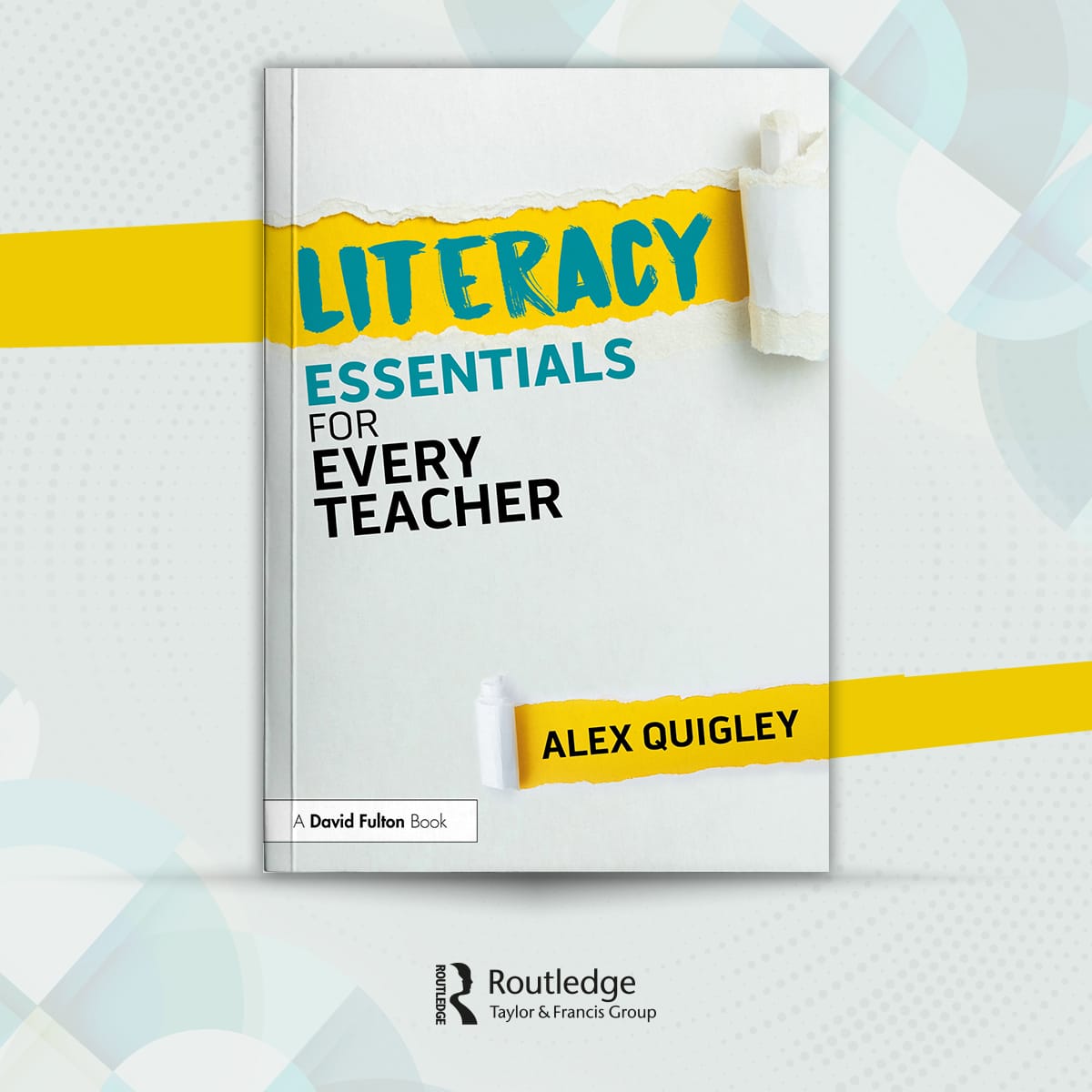
If you want to explore this topic further, my new book - 'Literacy Essentials for Every Teacher' - has a chapter focused on meaningful literacy assessment. Find it here:
Find free resources related to 'Literacy Essentials' on my resources page.

Comments