


There is a lot of warnings and worries when it comes to using AI in education. Teachers understandably worry that if ChatGPT, Gemini, and similar AI chatbots, do all the hard work and thinking, then students will opt out and learn less.
The idea of 'cognitive offloading' each homework or essay task by asking the chatbot for ideas and answers should be a worry. All of us are cognitive misers at one time or another. We don't want to think to hard. It is why, in classrooms, teachers have to work on the very edge of students' efforts and capabilities - pushing them and posing 'desirable difficulties' which helps them struggle but still learn.
A well established way to ensure that students are thinking hard and processing what they are learning is the act of physical note-taking. It is as old as education itself. On clay tablets, in ancient Mesopotamia, there are examples of students taking notes (some of the first schools were labelled 'edubba' - the 'House of tablets'). In Ancient Greece, homework was scrawled on clay tablets too.
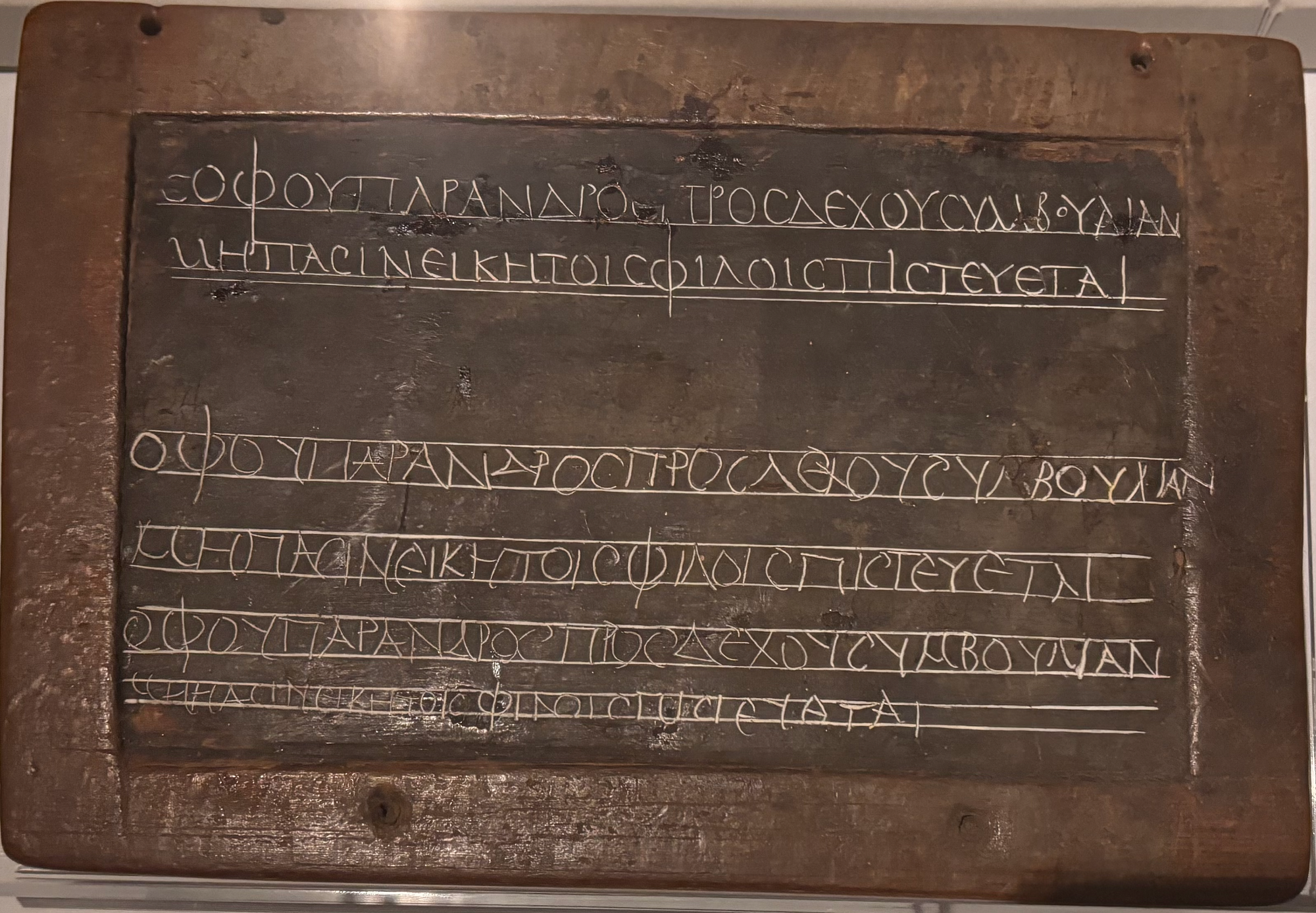
The essence of note-making is to make learning more active. The biggest danger of students using AI is it making them passive.
Across all social media, AI is being promoted as the solution to the effortful process of note-taking. See this X thread HERE.
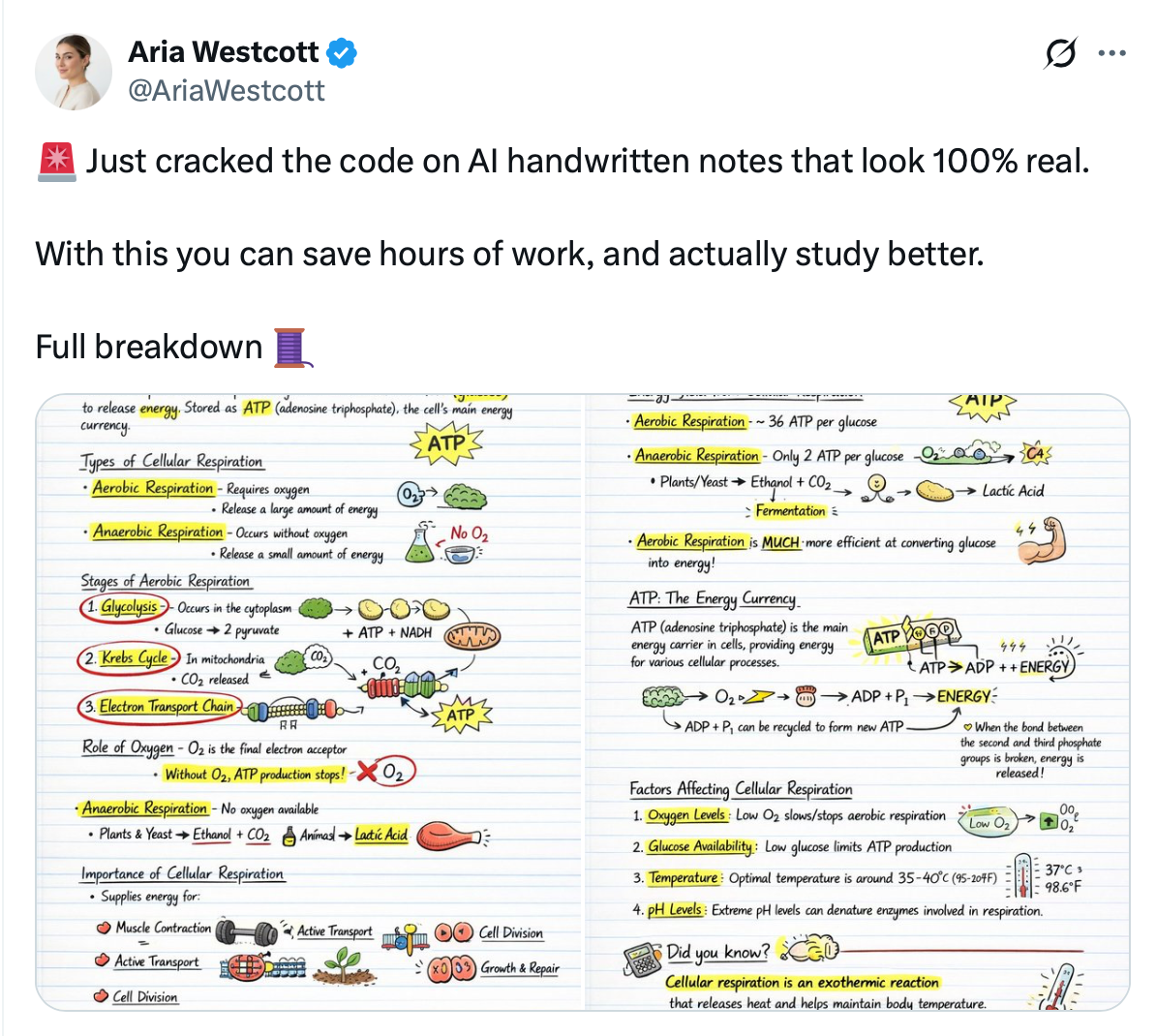
The problem is with these pleasant looking notes is the "hours of work" is the active stuff where students are actually learning.
If you aren't transforming the content by hand with thoughtful structures, you are likely short-cutting the learning curve.
Note-taking to make learning active
An interesting new study, based on a small sample of secondary school students, explored the effects of using AI chatbots and note-taking. It showed the benefits of making notes as well as making notes whilst using AI. Despite making notes being more successful for boosting comprehension, students still preferred using AI (LLMs - large language models) over note-taking.
You can see the danger here. Students can enjoy using tech and it makes things easier. Understandably, students want to make their learning easier in the short term. But in the long-term, challenge and difficult boost retention and comprehension.
With the advent of new technology, 'traditional' skills, such as note-taking and handwriting, can quickly come under threat. It is important then that we recognise why and how these skills benefit learning, and not drop them too quickly at the altar of tech innovation.
In ancient Egypt, students wrote their times tables 0n clay tablets. Does tapping on a screen have the same impact?
In Medieval times, students would have written lots of 'glosses' - notes in the margin - to help them interpret and understand religious texts. Do AI summaries have the same impact?
I suspect the answer is that these traditional and ancient approaches may have promised more memorable learning for students. Modern cognitive psychology seems to confirm that traditional modes of learning beat out the promise of AI.

There is a particular threat that students fail to grapple with the challenges of reading comprehension. From reading Shakespeare, to case studies in geography, or tricky problems in maths, students need to navigate difficult reading - particularly of extended texts. This act is what builds their background knowledge slowly and cumulatively.
Learn the easy way?
Already, Google are "re-imagining textbooks", with their 'Learn your Way' experiment. It takes complex topics and extended reading and 'personalises' it. Yes - it aims for more active learning, via questions embedded in the tex, narrated slides, end of topic quizzes. But it also translates the reading to be easier language and matches examples to your prior interests.
The problem with making what you read easier via AI is that is harms learning. Professor Tim Shanahan's book on 'Levelled Reading, Levelled Lives', explores how in America, reading based on the notion of of tackling texts adapted for your reading level (made easier in the majority of cases cases) stops students reading complex texts, or even age-expected reading, and it holds them back.
Google's approach may have strengths that promote active learning, but we need to have more research before we drop well-evidenced skills like note-taking or simplify books to make them easy-access.
Of course, any old note-taking isn't certain to promote more active, effective learning. Verbatim copying of text is unlikely to be as effective as generating ideas about what has been read, interpreting and summarising it. Students need explicit training in how to make productive notes. Structures like 'Cornell note-taking' offer helpful starting points, but students also need to understand why the additional effort of note-taking is likely to learn to better long-term learning.
Perhaps we can never stop the juggernaut of AI being used for education and learning. It is likely that in some cases AI used well can offer learning gains. But it appears that we may need to combine new technology with traditional skills like note-taking if we are going to actually see AI enhance learning. AI alone will make learning too easy and too passive.
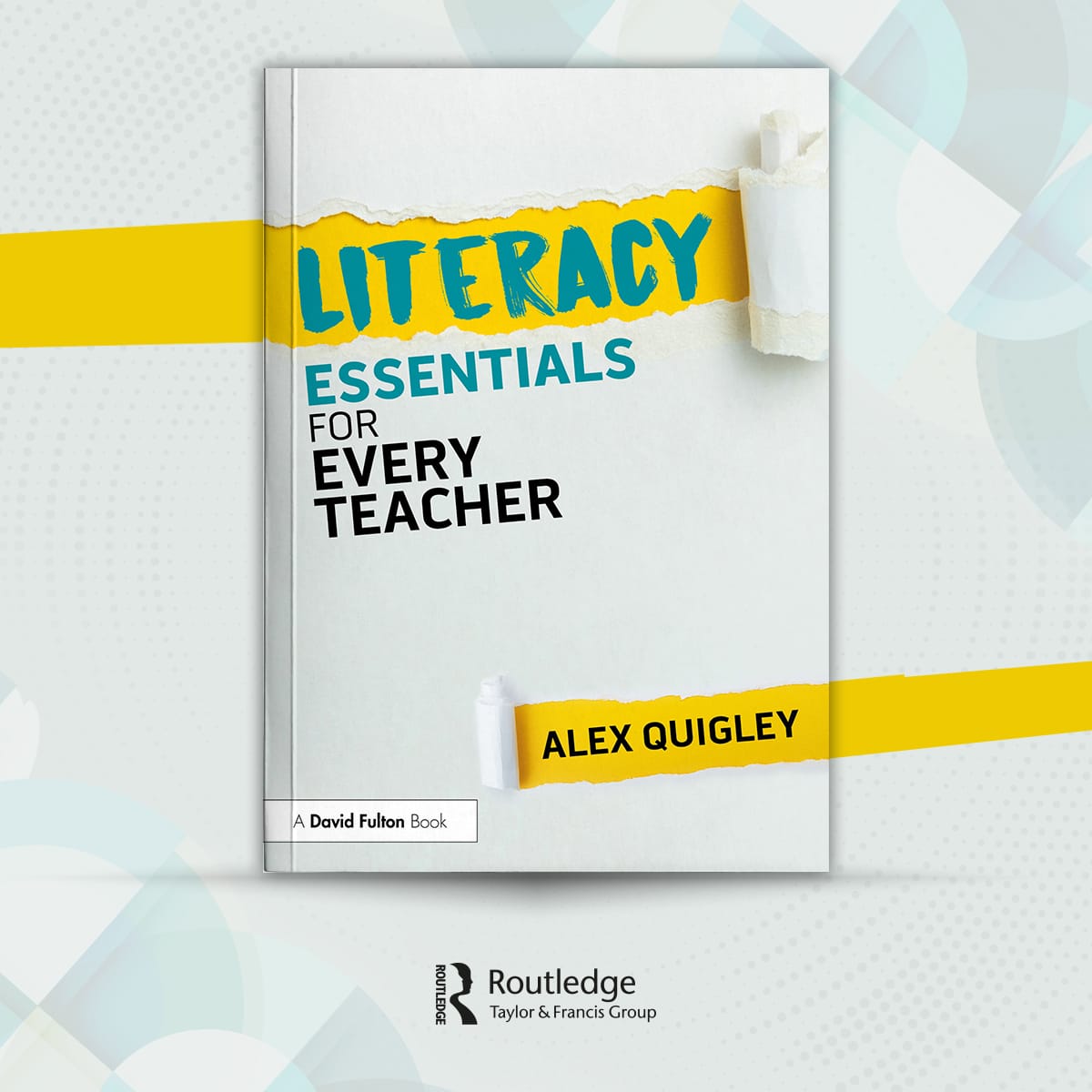
If you want to explore the literacy strategies that make a difference for learning, my new book 'Literacy Essentials for Every Teacher', is now available for pre-order. Secure yourself a copy for April HERE.


Comments