


In the last fortnight, flashes of sunlight and daffodils have brightened the days, whilst government announcements and interesting new resources keep coming to light too. In this edition, I share my latest writing on 'levelled readers' and disciplinary literacy, along with a new video on why independent study fails. Added to that is a book review based on grim US education history, along with new research on the relationship between reading and writing, a great adaptive teaching resource, and more.
What I am writing...
My latest TES column, entitled 'Do banded books make for poorer readers?', explores how the popular practice of using banded or levelled books, may be holding reading back in ways we don't anticipate. When matching reading levels of students with banded books proves an inexact science, we should consider, what might be a better approach to building reading habits, such as high quality book talk with ambitious, age-appropriate texts. READ THE ARTICLE HERE.

My latest personal blog explores the importance of disciplinary literacy - how we read, write, talk and use vocabulary in different ways in different subjects. Entitled, 'What teachers think about disciplinary literacy', I explore how teachers in primary and secondary schools can hold a very different notion of literacy. I refer to new research from Ireland about how teachers simply don't know enough about disciplinary literacy. READ MORE HERE.
I recently recorded a podcast for Exam Study Expert on why learning - and particularly independent study and revision - fails and what to do to be more successful. You can find the podcast in the usual haunts. There is also a YouTube video recording HERE.

What I am reading...
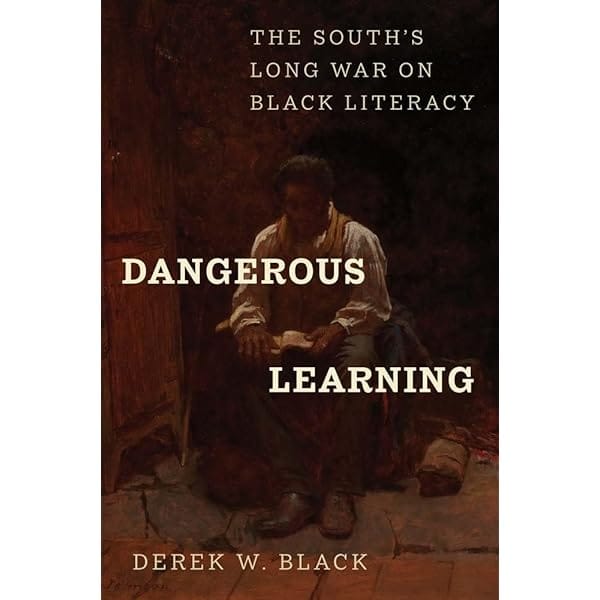
We can take literacy for granted in our daily lives. Right now, the onset of AI causes great consternation and excitement in equal measure, but we can too-easily forget that the 'technology' of reading and writing - indeed universal education - is only recent in modern history. High levels of literacy has only been common in the Western world for not much more than a century. Understanding this history is vital and compelling. Derek W. Black's book on the history of education and 'black literacy' in the USA - 'The South's Long War on Black Literacy' - is at once intriguing and also instructive in equal measure. It reminds us of the insidious social controls that can drive racism, whilst at the same time asserting how vital literacy can be in individual and wider social freedoms. From grim stories of slavery and anti-black violence, to burning down schools, to underfunded schooling for black Americans, the book skewers inequality and racism in the USA that should make us think about the fragility of our society and the successes that can be sown by universal education and literacy. FIND THE BOOK HERE.
What research and resources I am interested in...
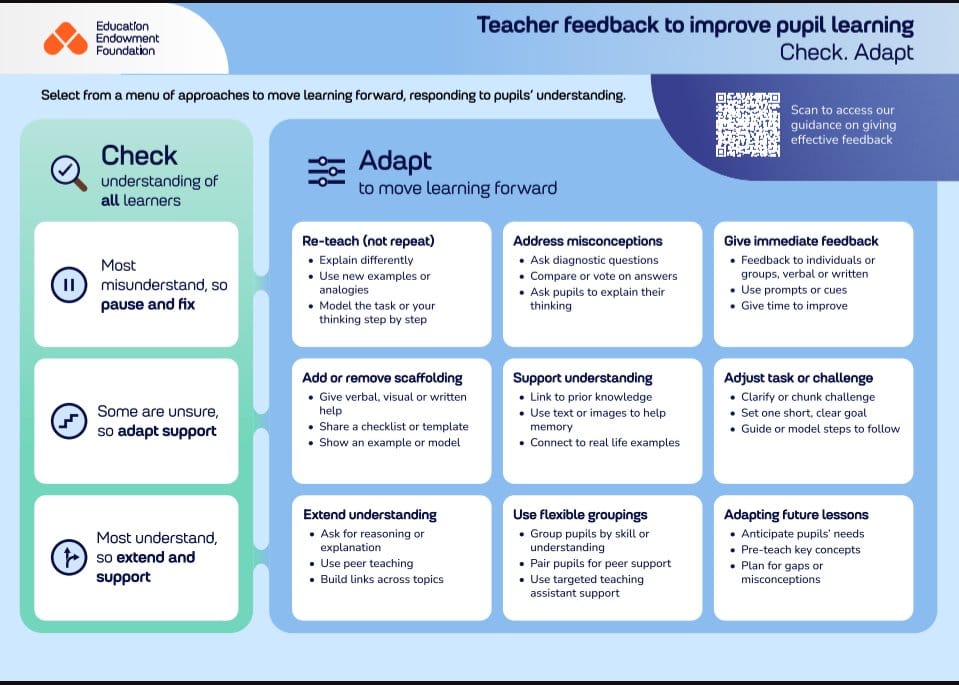
The Education Endowment Foundation has published a new resource to support adaptive teaching and effective feedback in classrooms. Entitled, 'Check.Adapt', it is a handy reflective tools to consider what sensitive adaptations we are making day in day out in the classroom. FIND THE RESOURCE HERE.
For teachers and leaders in England, the new government policy White Paper, entitled, 'Every Child Achieving and Thriving', it sets out a range of policies that impact schools in England for the next few years. The emphasis is SEND and inclusion, but there is a lot more on reading, curriculum, assessment and more. There is a DfE blog which is a concise explainer HERE - and the full document is HERE.
What is the relationship with early reading and writing for young children? This study charts the links, entitled 'What Explains the Relations Between Reading Comprehension and Written Composition? Findings from a Longitudinal Study', researchers show in their small, longitudinal study that these skills predict one another rand nursery age language skills predict reading and writing in year 3 children. This progress is mediated by oral language, word knowledge and handwriting fluency. READ THE RESEARCH HERE.
Can moving good teachers to a new area improve outcomes for struggling students like policy makers often predict? New US research, entitled 'Is teacher effectiveness fully portable? Evidence from the random assignment of teacher incentives', found that when effective teachers are transferred to somewhere else, the gains don't follow them. The idea of dropping great teachers into challenging schools seldom offers the gains we hope for. READ THE RESEARCH HERE.
Can targeted writing instruction improve outsources in subjects like history where students have to build knowledge of the subject? New research focused on enhancing disciplinary literacy through writing. This small study showed that targeted writing instruction in a small sample of Dutch schools improved both knowledge of history and writing outcomes. Do we ensure every teacher knows how to unleash reading and writing skills to boost subject success? READ THE RESEARCH HERE.
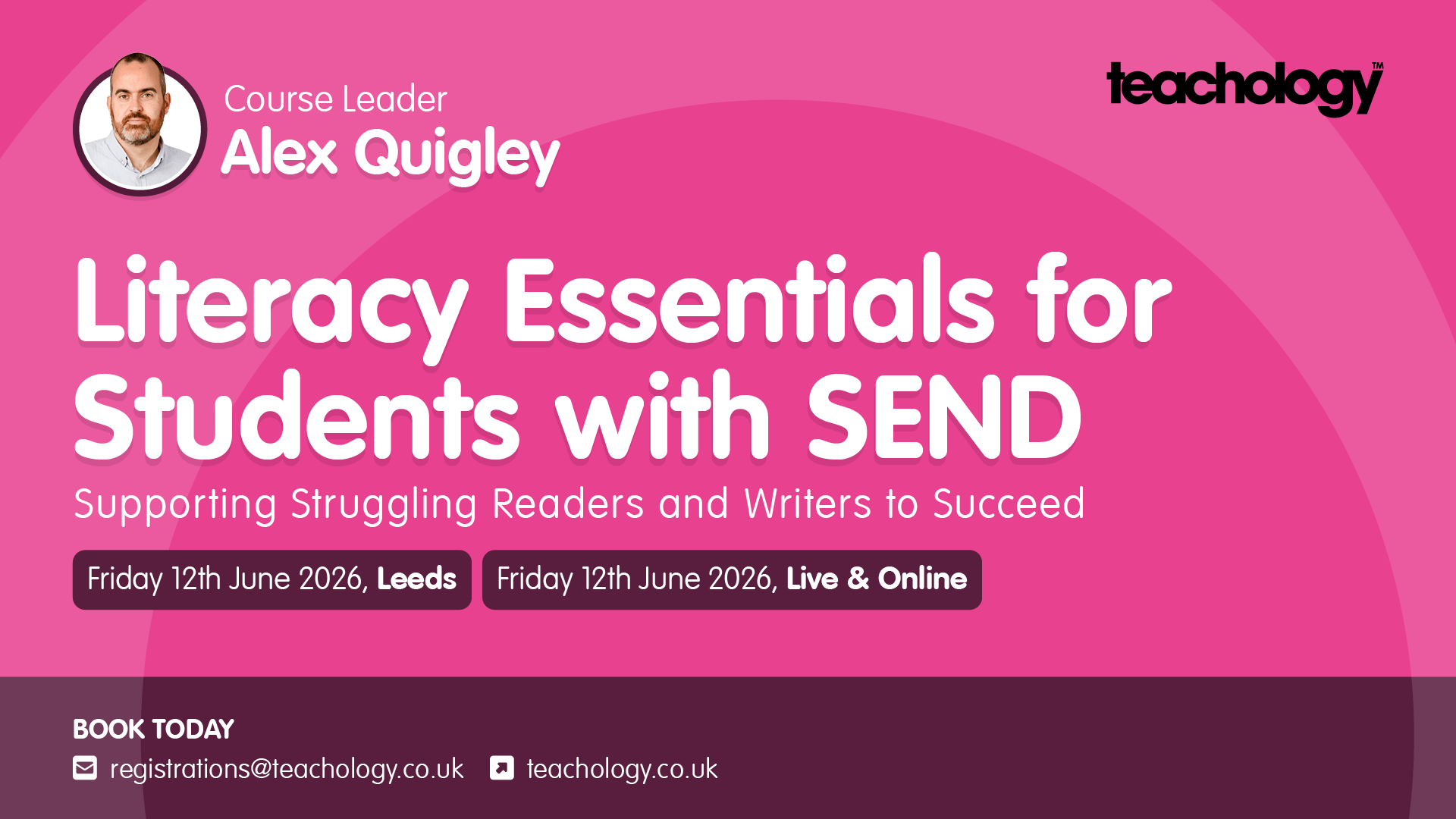
This summer, I am undertaking a new Teachology Masterclass on 'Literacy Essentials for Students with SEND'. I explore how to support students who struggle with the vital skills of reading and writing. I explore the SHARE model (S - Scaffolding of challenging tasks; H - High expectations of every student; A - Assessment-driven adaptations; R - Responsive interventions; E - Explicit teaching of reading, writing, talk and vocabulary) pen portraits of different SEND needs and related literacy barriers, and much more. FIND OUT MORE HERE.


Comments