


What if your child struggles and falls behind their peers? When it comes to the topic of children struggling in school and education, parents can experience profound feelings of fear or worry, or hope and relief. Students can feel the same array of strong emotions whether they struggle or not.
With my own children, I was keen observer of my children's early learning. I wanted to help them at every stage. As a trained teacher, I was able to spot some strengths and struggles early, alongside intervening when it might have been needed too.
When you see your son struggling with early reading and spelling, compared to their siblings or friends, you want to see it fixed. You don't want them to feel insecure or stupid. You want to find answers.
When you see your daughter finding maths inexplicably hard, tripping over problems, you want to get to the bottom of why. What is the barrier to learning? It is something you passed on (with all the guilt that can elicit)? When you hear labels 'dyscalculia' or even 'maths anxiety', it can come as a significant relief to see a seeming-answer to your worries.
The emotional terrain of seeing your child, or your students, struggle has a profound emotional weight that is unique and powerful.
'The Rumpelstiltskin effect'
Medical and psychology professions have sought to understand the psychological power of labelling a condition which applies to special educational needs: the Rumpelstiltskin effect.
'Frances undertook a psychology assessment, where she displayed features of ADHD. Hearing the diagnosis for the first time helped explain a thousand behaviours she hadn't pieced together. The relief meant she slept better, reduced her anxieties, and boosted her mood. Her parents felt equally relieved and happy.'
In the iconic Brothers Grimm folk tale, 'Rumpelstiltskin', it sees a desperate mother make a deal with a strange man to free her daughter from being locked away endlessly spin gold. When the strange man calls to claim his agreed promise of a first-born, the mother can only unlock the bleak agreement by speaking the name of the man aloud:
'Rumpelstiltskin, Rumpelstiltskin, Rumperlstiltskin'.
Receiving a diagnosis with a name and a status that medical experts validate can give children and adults a story, and an explanation, that renders their experience comprehensible. Like naming Rumpelstilskin, naming a health condition or special educational need can have an immense power.
Once you better understand and name the issue, the more reassured you can feel. Indeed, your identity can shift irrevocably.
The negative psychology of SEND labels
Though it may be liberating to find an explanation for your pain and struggles, it may also be a double-edged diagnosis.
Perhaps that student's teacher develop a subtly negative stereotype of what the student can or cannot do? Perhaps Frances' ADHD helps Frances, but inadvertently lowers expectations of her educational success? There is lots of evidence for this negative stereotype bias for students with SEND, such as when it is attributed to students with dyslexia.
Consider the two different descriptions:
'I am dyslexic'
'I sometimes struggle with reading'
Even subtle language uses could influence the identity and psychology of students with SEND, teachers, and parents. Using the noun 'dyslexic' could make students and their parents think it is a fixed, unchangeable state, rather than something that can be tackled.
It is sometimes forgotten that special educational needs are not all meant to be lifelong barriers to learning. For example, early reading and writing issues can be addressed with targeted academic support and high quality teaching. We should emphasise the temporary nature of some special educational needs, but there is little incentive to do so.
Right now, debates in the media about changes to the SEND system in England are raging. Any change to the special educational needs system - no matter how dysfunctional the current system is described by all parties - feels like a loss.
Parents, on a deeply emotional level, like most adults psyche, are 'loss averse'. As a father, I know I am when it comes to my kids.
SEND labels can be hard won and equally hard to move on from. Loss aversion strikes. Parents understandably worry that the support may go too soon.
A changing SEND system in England
Any debate about shifting the SEND system will elicit worry, angst and more, even if the existing system isn't really addressing the issues parents hope it is for their children.
It is therefore no surprise that many columns and tv items are framing potential SEND policy changes with 'loss aversion' in mind to gain a bigger audience. This I-paper link zooms in on those worries and reveals the understandably delicate terrain of SEND, labels and diagnoses.
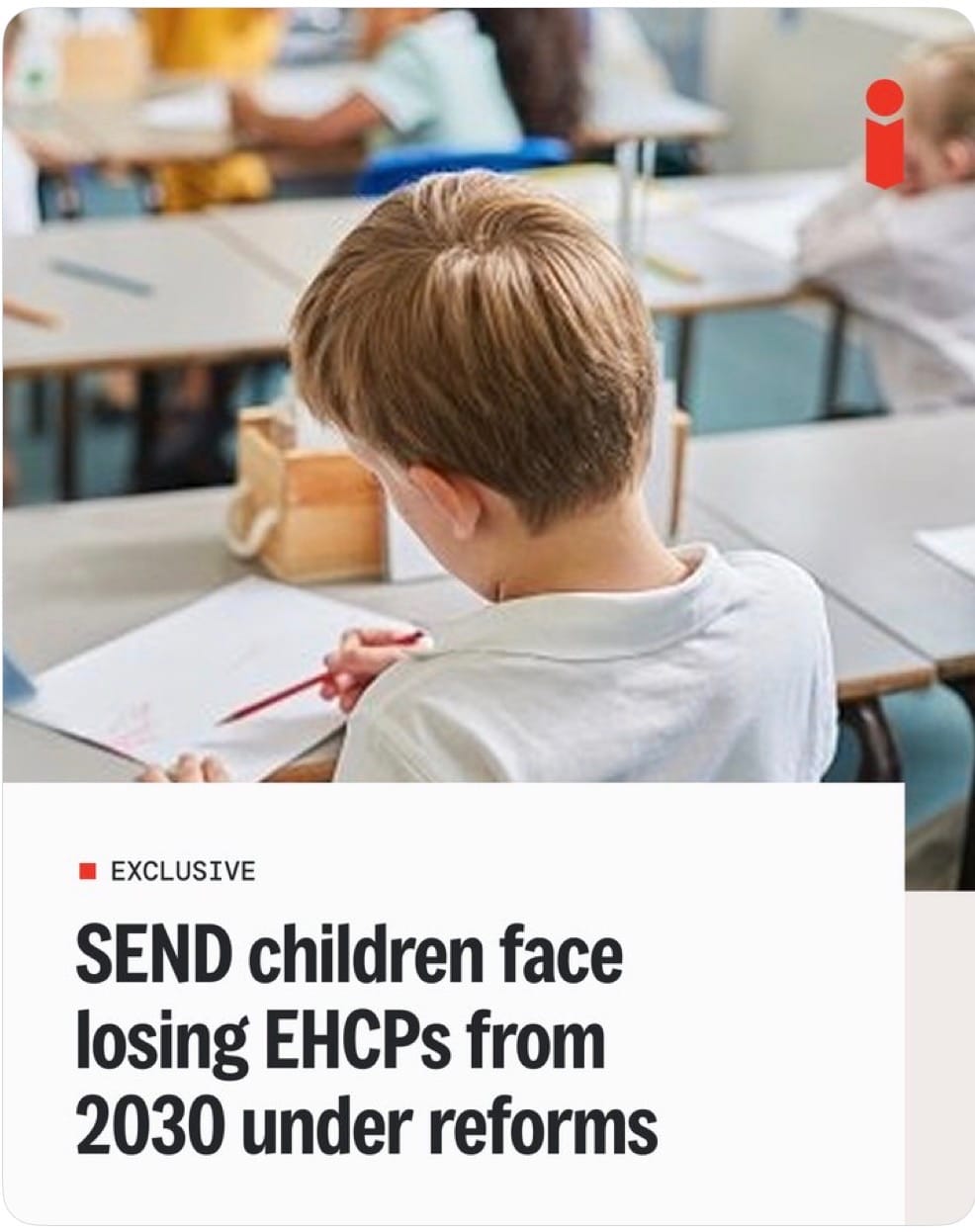
We need to respect parental worries and anxieties. Students too. We need to support teachers and leaders to navigate this complex emotional terrain where we can. Worry and fear can be replaced by assurance and confidence over time, but it is a difficult, tricky journey for everyone.
Better understanding the emotions and psychology attending how we think about SEND, and the array of complex labels, may be a small but significant starting point to share and understand one another's perspectives and feelings.


Comments