



It can sometimes feel like primary school and secondary school teachers inhabit different worlds. It is no surprise then that teachers at different phases have diverging views and beliefs given their dissimilar experience.
The saying goes that primary school teachers teach the whole child, whereas secondary school teachers teach their subject. This may have a grain of truth. It may also explain why people in education can argue so vehemently online about different teaching methods rooted in their specific experiences.
But one thing that unites every teacher is literacy. Every teacher mediates writing, tricky reading tasks, specialised vocabulary, along with specific ways of talking.
The notion of 'disciplinary literacy' captures much of the reality in different areas of the curriculum. It focuses on how we read geography case studies differently to science texts, or write stories in English in unique ways compared to writing essays in history.
It would make sense then that primary teachers don't view disciplinary literacy in the same ways as secondary school teachers.
Do primary and secondary school teachers think differently about literacy?
In really interesting new research by Irish academic, Dr Patrick Burke, entitled 'Literacy in the disciplines: Comparing primary and secondary teachers’ conceptualisations, practices and sense of efficacy', he explores attitudes to literacy, along with self-efficacy (self-confidence that you can do a thing) in teaching literacy approaches. In-depth interviews are coupled with self-efficacy surveys of teachers from both primary and secondary schools from a sample of Irish teachers.
One obvious difference as children age is that their experience of literacy (reading, writing, talk and academic vocabulary) changes over time. Teachers who experience teaching a young child to read with a phonics programme and early handwriting practice feels a world away from reading dense science texts or writing history essays.
You'd think secondary school teachers would be much more confident in 'disciplinary literacy' given their deep subject knowledge. And yet, the secondary school teachers interviewed in Irish schools invariably lacked literacy-specific expertise and training.
In contrast, primary school teachers may not always have a depth of subject knowledge, but they are more often trained in developing reading and writing skills. The disconnect between literacy knowledge and practices is therefore unsurprising.
The interviews found lots of interesting insights:
- Most teachers understood that the primary and secondary school transition was a real point of vulnerability. Too many teachers were uncertain of the literacy demands of either phase. One teacher identified the lack of join up created a gap which can prove a “huge downfall of the system”.
- Some views of disciplinary literacy characterise it as increasing "specialisation" throughout schooling, but interviews revealed that Irish secondary school teachers didn't really see disciplinary literacy as key and special for their work beyond vocabulary work on 'key words'.
- Basically, neither Irish primary nor secondary school teachers saw disciplinary literacy as central to their work. Literacy was more about basic and transferable skills of reading, writing and some key words.
- 'Basic' literacy was prioritised and understood, but the more sophisticated notion of 'reading like a scientist', or how to develop history writing, or oral reasoning in maths, has not yet become established in Irish schools.
Disciplinary literacy: more to know and do
We can speculate about the parallels with teachers in England and their beliefs, knowledge and practices that relate to disciplinary literacy.
Perhaps there is more widely known about disciplinary literacy practices? The EEF guidance on 'Improving Literacy in Secondary Schools' has proven popular in England. Books like Shareen Wilkinson's 'Disciplinary literacy in primary schools: Reading, writing and speaking across the curriculum' have emerged.
The focus on reading and curriculum in inspections in England over the last few years has likely led to a greater focus on subject ways of thinking (and communicating in some cases). But there are still too few examples of schools and trust plans that pose a scope and sequence for developing both basic literacy skills and disciplinary literacy.
A focus on disciplinary literacy could form the basis for a stronger transition between primary and secondary school. It can and should be a lever for more inclusive teaching for students who struggle to access the curriculum. It can be a focus for improving teaching and learning more broadly.
As reading and writing success is synonymous with academic success, disciplinary literacy isn't a nice-to-have extra for teachers. Instead, it is fundamental to the success of every student.
In reality, there is much more to do. We need to start by helping more teachers to think more about the promise of disciplinary literacy.
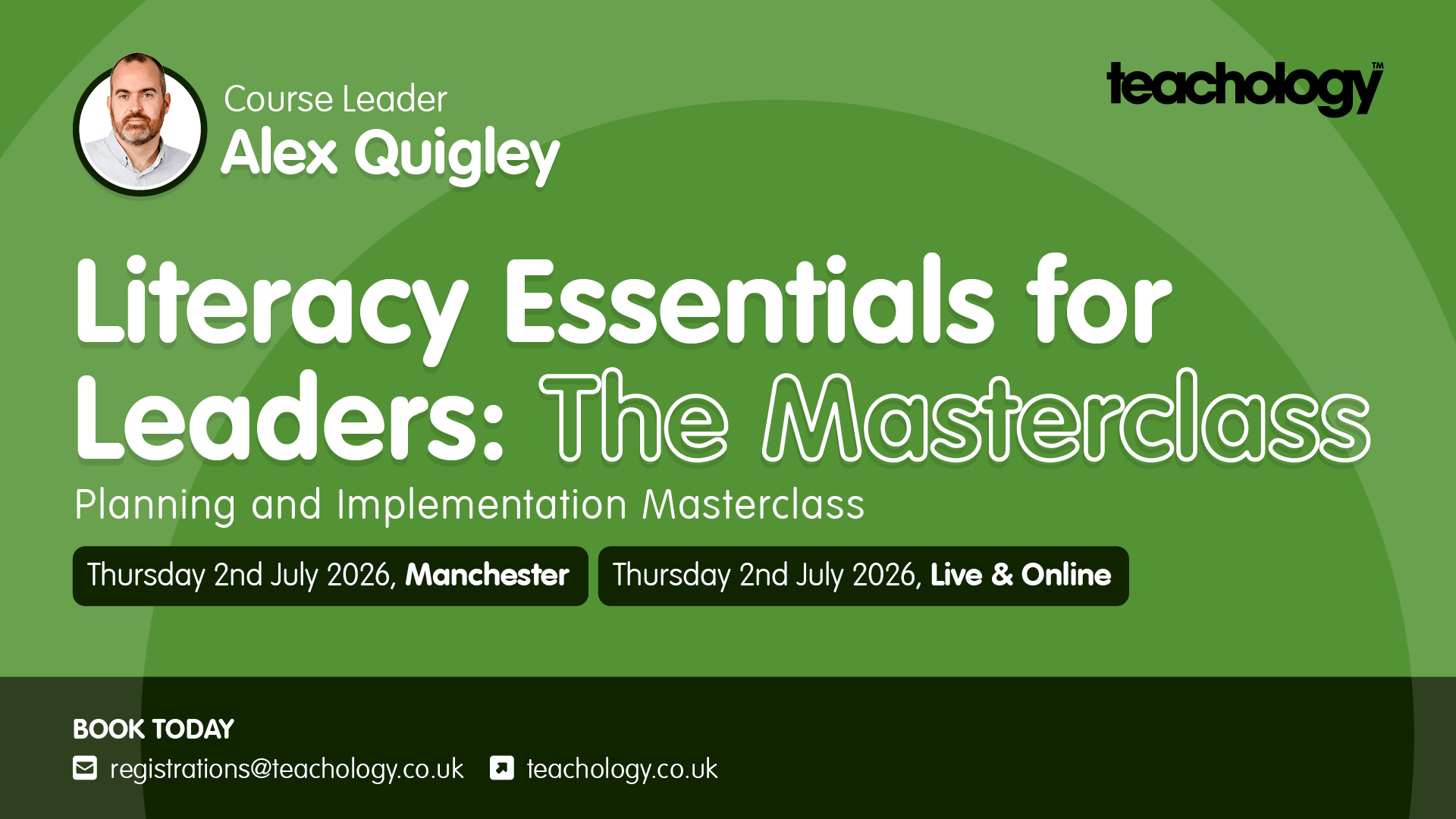
My new and exclusive 'Literacy Essentials for Leaders' Teachology Masterclass explores the new concepts and plans in my new book. It is LIVE in Manchester and ONLINE - on Thursday 2nd July. Unique new elements include:
- An easy to follow 5-step literacy leadership cycle
- Exclusive planning and lesson observation tools
- Literacy assessment insights and planning prompts
- Connecting reading, writing, talk and vocabulary together


Comments